

/ News, Forschung, Events, Campus, Katekisama
Katekisama Conference Global ‘Global Studies’
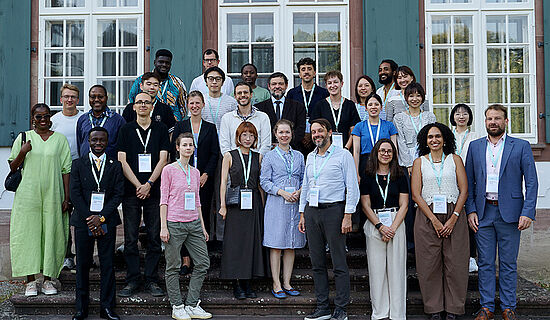
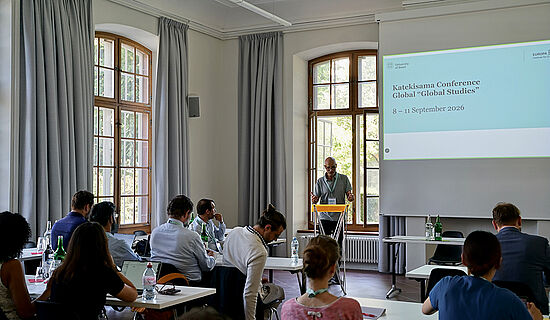
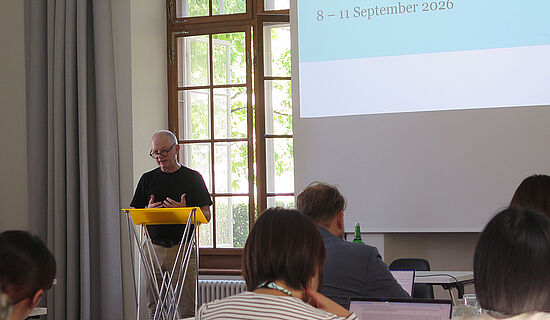
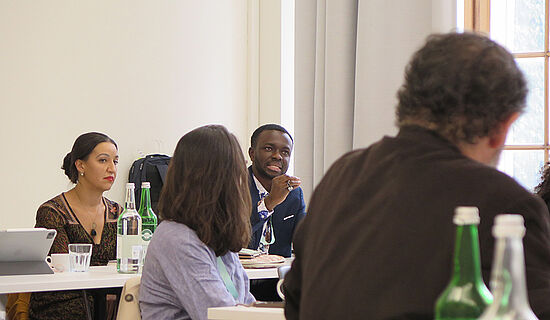
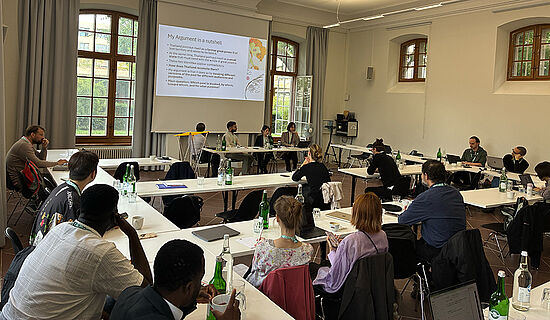

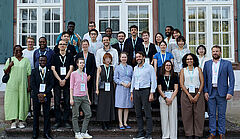
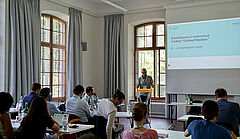
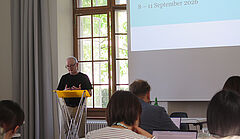
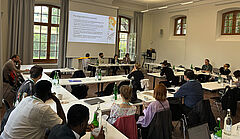

From 8 to 11 September 2026, an international conference was held at the Institute for European Global Studies within the framework of the Katekisama Programme, a research and teaching initiative between the Universities of Bonn, Ghana (Accra), São Paulo, Tokyo and Basel. The conference brought together over 50 participants from all five universities – including 19 professors and students from the partner institutions abroad – under the theme “Global ‘Global Studies’” to discuss how best to study issues of global scope and relevance and deal with key issues of positionality, politics and interdisciplinarity.
The opening ceremony on Tuesday, 8 September included an input from Prof. em. Dr. Madeleine Herren-Oesch on “Katekisama – The Power and Potential of Global Academic Networking”, where she outlined the history of Katekisama and its relevance for present and future teaching and research collaboration. This was followed by remarks from the university leadership of all five Katekisama partner institutions.
Tuesday’s afternoon session launched the overarching conference theme by bringing together professors from the five Katekisama institutions to make brief reflections on the challenges facing global studies within their respective fields: from migration studies to comparative philosophy, transnational law, international relations and Asian studies. The evening’s thought-provoking keynote address by Prof. Dr. Elísio Macamo (University of Basel), entitled “Studying Africa, Making the World Thinkable”, further deepened the discussion by asking what is meant by “globality”, how to deal with positionality in research, and the challenges and opportunities of working with concepts and ideas originating from diverse contexts.
The morning sessions on Wednesday and Thursday were dedicated to PhD workshops, where graduate students – mostly at an early stage in their research – could present their work in progress and receive feedback from their peers and the more senior academics present. The interdisciplinary workshops featured a colourful range of topics from young emerging scholars across the globe and highlighted the productive potential of the Katekisama network in practice.
The afternoon sessions delved into four specific topics in separate panels, namely Global China; Uses of History and Global History; Migration, Regional and Global; Platform Technologies, Law and Global Orders. Each panel was composed of speakers from across the partner universities and from different disciplinary backgrounds, and the papers were followed by fruitful and lively discussions with the audience.
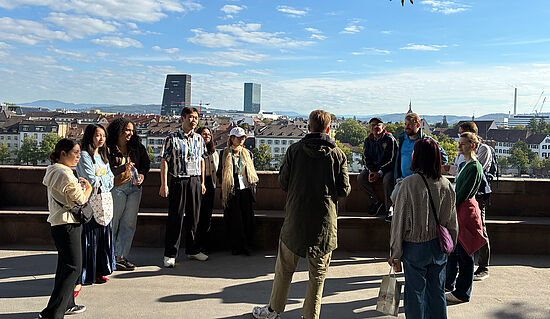
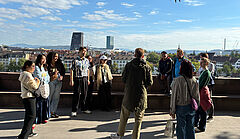
Despite the wide-ranging conference theme and the diversity of the individual panels and projects presented, a number of cross-cutting themes came to the fore, including translation, concept travel, positionality and interdisciplinarity. The format and setting of the conference, and additional events such as the “Global Basel” city tour, further promoted networking and exchange among the participants, across academic and geographic divides, and helped drive the Katekisama Programme into a new phase. It thus demonstrated successfully how, through eye-level collaboration and partnership, global studies can be pursued in a more truly global fashion, while not eschewing difficult but enriching discussions around different positionalities and politics.
The conference was jointly funded by the Swiss National Science Foundation (Scientific Exchanges Funding Scheme), the Graduate Programme in European Global Studies, and the Institute for European Global Studies.