

/ News, Forschung, Weiterbildung, Campus
New Publication on Xi Jinping’s Cadre Selection System
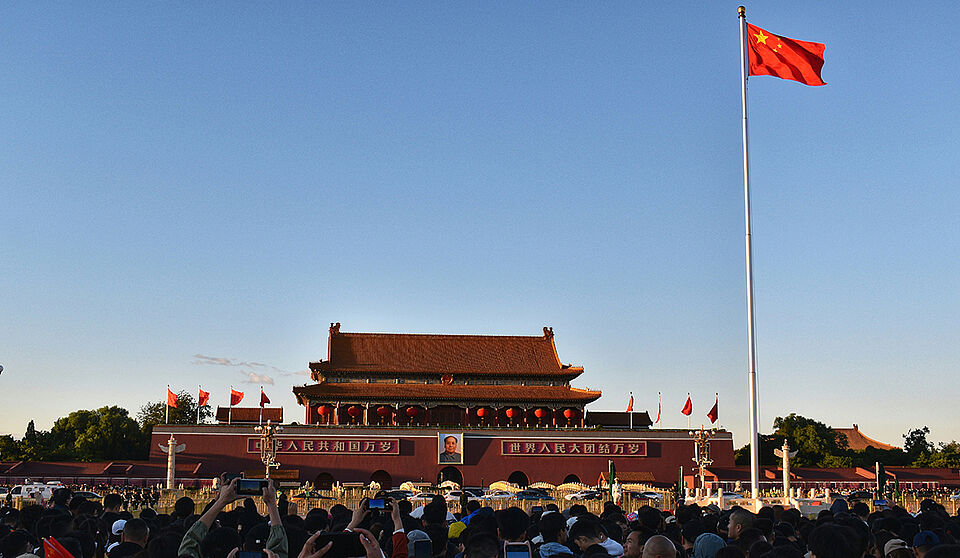
Filip Jirouš and Ralph Weber examine how changes to the Chinese Communist Party’s cadre selection system under Xi Jinping have strengthened centralized Party rule, reversing earlier experiments with more bottom-up selection mechanisms. Their article “Xi’s Leninist Selectocracy has Cemented Party Dictatorship” was published in "China Brief" by the Jamestown Foundation on 18 July 2026.
The authors argue that Xi Jinping’s reforms to the nomenklatura system represent a return to Leninist party-building norms following experiments with more bottom-up mechanisms under Hu Jintao. Measures such as eliminating straw polls for cadre selection have reinforced the Party’s top-down governance system. Xi’s role in the leading small group for cadre selection allows him to personally oversee loyalty and integrity in promotion processes, while also countering factionalism and alternative power structures. Looking ahead to the 21st National Party Congress, the authors expect cadre selection to largely follow the procedures established for the previous congress in 2022.
Ralph Weber is Vice Director and Professor for European Global Studies at the Institute for European Global Studies, Academic Director of its Graduate Program and a Research Councilor at the Swiss National Science Foundation. He specializes on methodological and conceptual aspects of cross-linguistic and cross-cultural research, the global history of political ideas and Chinese politics, particularly the Chinese party-state and its transgressive political activities abroad.
Filip Jirouš is a doctoral researcher at the Institute for European Global Studies. His research focuses on Chinese intelligence, political influence, and interference. In his dissertation he examines the PRC’s influence networks in Europe. He previously worked as a political risk analyst on China and as a researcher at Sinopsis.cz.