

/ News, Events, People, Campus
International Conference Honours Madeleine Herren on Her 70th Birthday
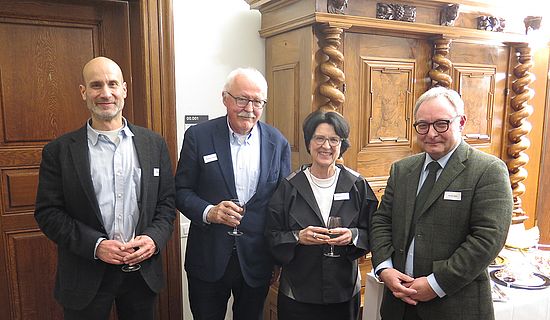
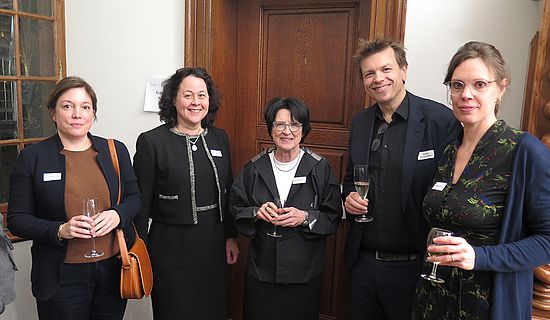
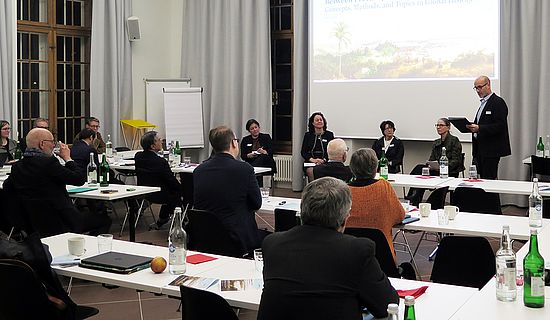
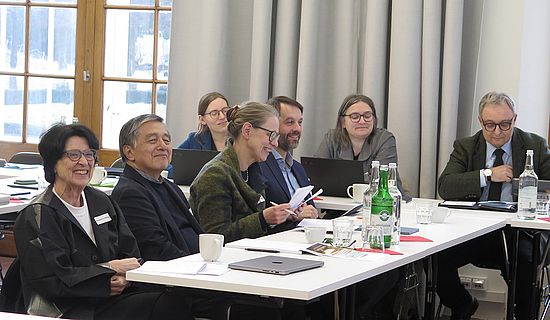
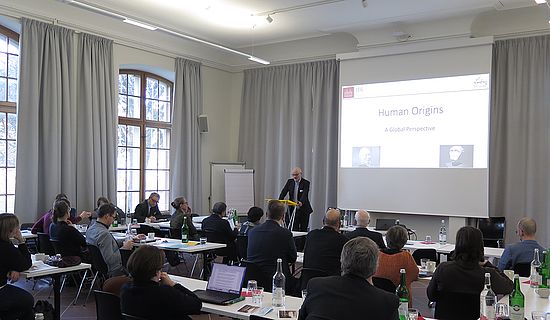
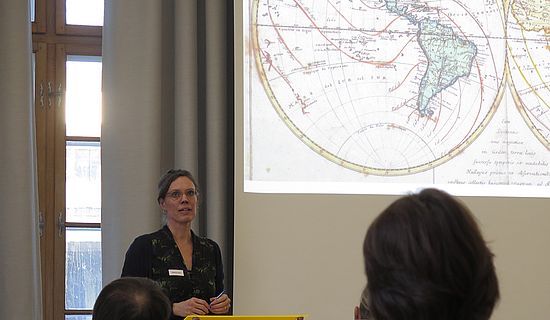
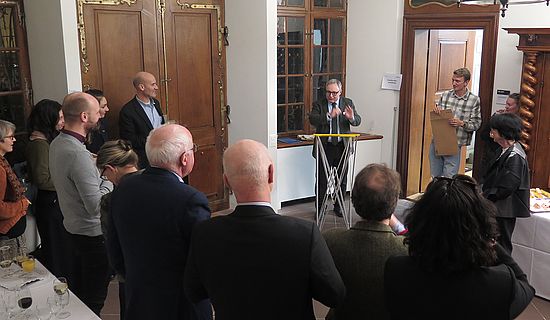
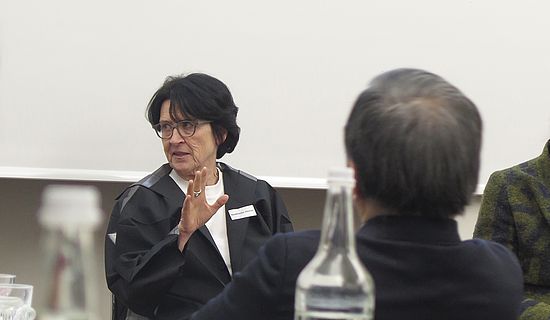
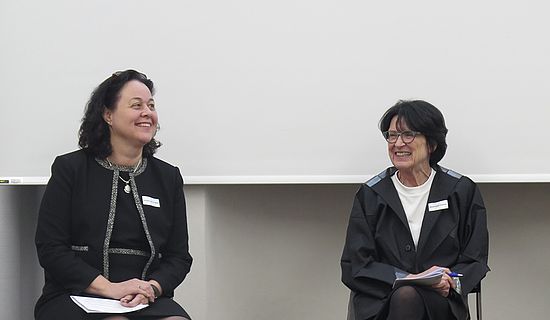
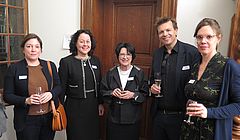
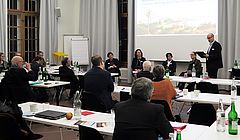
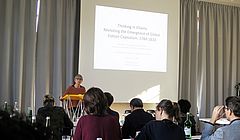
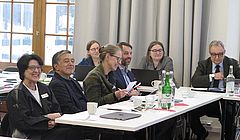
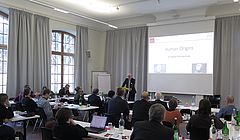
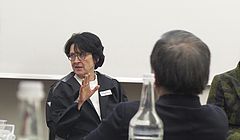
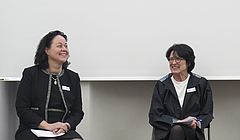
On the occasion of the 70th birthday of global historian Madeleine Herren, the Institute for European Global Studies at the University of Basel hosted an international conference reflecting on the past, present, and future of global history. Scholars from across Europe gathered to discuss key themes that have shaped Herren’s work and the wider field, ranging from internationalism and global capitalism to new historical methodologies.
The conference was opened by Corey Ross and Lars Kury (University of Basel), who introduced the event and highlighted Madeleine Herren’s lasting influence on the development of global history. As the former director of the Institute for European Global Studies and a leading scholar of internationalism and global governance, Herren has played a key role in shaping debates about transnational and global historical approaches. The conference provided an opportunity both to celebrate her scholarly achievements and to reflect on the evolving agendas of global history.
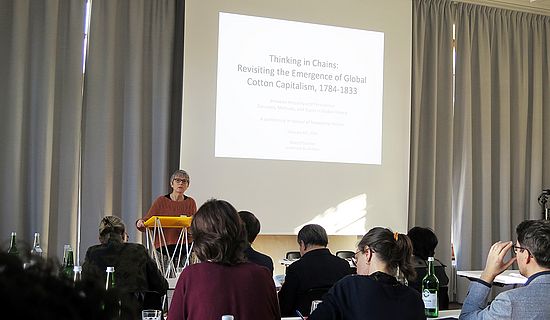
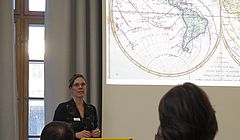
The programme was structured around three themes closely connected to Herren’s research: the history of internationalism and global governance, the entanglement of logistics, mobility and capitalism, and the search for innovative historical methods and sources. In the keynote lecture, Mary O’Sullivan (University of Geneva) revisited the emergence of global cotton capitalism in the late eighteenth and early nineteenth centuries. By tracing the connections between cotton plantations in the Americas and textile manufacturing in Britain, she demonstrated how global perspectives help explain economic developments that cannot be understood within national frameworks alone.
Roland Wenzlhuemer (LMU Munich) then turned to the conceptual future of the field in his talk “Salvaging Global History.” Reflecting on the trajectory of global history over the past decades, he argued that the field may require new theoretical impulses and a willingness to rethink established approaches.
Johannes Paulmann (Johannes Gutenberg University Mainz) offered a global perspective on the history of palaeoanthropology. His presentation explored how discoveries of early human fossils became entangled with scientific debates as well as with political and cultural agendas in the twentieth century.
In the second afternoon session, Isabella Löhr (University of Potsdam) examined the political activism of the ecumenical movement and its engagement with questions of racism, decolonization, and human rights. Her talk highlighted the shifting priorities and global networks that shaped these debates throughout the twentieth century.
The final presentation by Ines Prodöhl (University of Bergen) addressed how global economic history might be written for new generations of readers. She discussed an ongoing book project that seeks to introduce broader audiences to global historical perspectives through innovative narrative approaches.
The conference concluded with a roundtable discussion featuring Susanne Burghartz (Basel), Amalia Ribi Forclaz (Geneva), Madeleine Herren (Basel), and Kerstin von Lingen (Vienna), moderated by Corey Ross. Participants reflected on the current state of global history and discussed how the field might continue to evolve in a changing academic and political landscape.
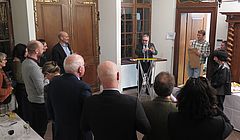
Following the academic programme, historian Sacha Zala (University of Bern) paid tribute to Madeleine Herren’s career and scholarly achievements in a passionate and engaging address. The event concluded with an apéro riche.